
I wanted to re-do my One Piece write-up because I think it would be a lot better to condense my thoughts a little instead of trying to do this unnecessarily huge essay on every single arc. The reason for that is to better accommodate anyone who’s curious about One Piece, as I was once not too long ago in the same position you guys were, as well as because my thoughts on some of the more recent arcs have ether changed or have become more nuanced over time.
...watch as it still gets long as piss anyways.
Okay, let’s answer the big question up front. Was it worth it? Well... yes and no. The thing is, the internet certainly hypes it up and frames it as sort of like this “modern odyssey”, but upon closer inspection... no, no it is not.
To compare it to the rest of the “big three”, I felt that Naruto peaked early and then dipped more into comfortable mediocrity. Bleach... it was bad. As for where that leaves One Piece, it’s a tale of high points and low points.
In short, your mileage may very.
I’m personally glad that I caught up, but it’s not like it was a free and easy process. To put things into perspective, the first season of Pokémon first aired during April 1997, whereas the first chapter of One Piece was published on July of the same year. That means One Piece is long, you’ll just have to sacrifice 100+ hours of your time and there’s no way around that.
I do mean it when I say that because the Toei adaptation is fucking awful. You are not watching the anime. It drags an already long story out even longer than it already is, and it just gets more and more excruciating the farther in you go.
There are fan projects like “One Pace” as well as a new adaptation produced by Wit Studio on it’s way (“The Girl from the Other Side” is very good), but as of writing, there are no real shortcuts and there’s no good way to accelerate the process, so you’ll just have to read the original manga.
I will say, one of the great benefits, is how much fun One Piece is to talk to people about it. One Piece discourse is fucking awesome. I can recommend that if you have any friends or like a book club or something, there’s just so much to discuss with One Piece, even parts I didn’t particularly enjoy introduced some of my favourite points of conversation with other people online.
But regardless of whether or not if you have somebody else to talk to people about it, whether or not you’ll enjoy it doesn’t actually have a real catch-all answer because this was not a consistent experience. One Piece definitely has it’s moments, sure, but it also has it’s fair share of low points, and I found that they often ended up right next to each other.
The thing is, I somewhat frequently flipped between not being able to stop myself from turning to the next page, to having to force myself to turn to the next page. So, if I hadn’t committed myself to finishing the series, there were multiple points where I probably would have dropped it.
East Blue
Chapters: 1-100 (100)
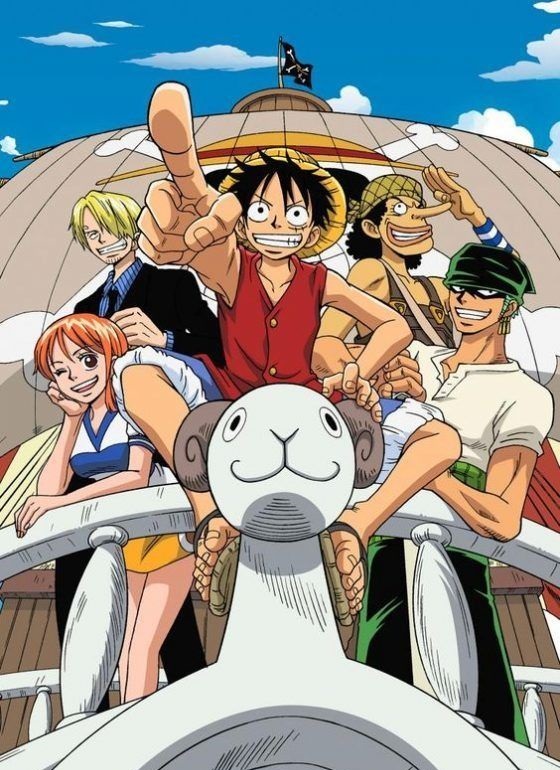
I thought East Blue was generally pretty good by the time I finished it, but... it does take a little while to get going. A part of the problem was that this is not actually the true beginning for One Piece per say, it’s basically just a small prologue to the behemoth that is the rest of the series.
I think East Blue generally gets better the deeper into it you get. The only exception really is Romance Dawn, it’s better than Orange Town and maybe even Syrup Village, but then Baratie is better than all three of them, and Arlong Park actually culminates in one of the strongest arcs One Piece has to offer.
In short, the best portion of East Blue is the end.
I think pretty much all of these arcs use the same overall narrative structure, but some just do it better. Arlong Park works so well because it’s the culmination of everything that’s come before it, taking basically the same template that was used for all the arcs before it, but adds in a really cool plot twist in addition to plenty of great moments for all of the main characters.
It also has a great villain, Arlong, the other good one being Buggy the Clown.
To speak of the villains, that’s probably one of the weaker aspects, not just of East Blue, but of One Piece as a whole. There’s some good ones sprinkled throughout to be sure, but Higuma, Captain Kuro, Don Krieg, while I felt they all made sense, don't get me wrong, I also felt that they were all pretty lacking.
Where Eiichiro Oda really excels, thankfully, is with the protagonists. All of them are likeable and compelling, and the process of watching Luffy convince each of them to open up their hearts and eventually join his crew, it’s great, every since time.
These first 100 chapters... I mean, they were fine, it’s not like they blew my mind or anything, but they were good enough that I felt compelled enough to keep reading, especially after Loguetown.
Loguetown was pretty good because in such a short amount of time, it was able to push a lot of forward momentum for the story, introduces some really cool characters and plot threads, and even brings back some characters that, at the time, I wasn’t expecting to ever see again.
East Blue has a really solid beginning, but after that it can jump from being really engaging... to honestly really fucking boring and unremarkable, but starting with Baratie at least, I felt that it was really able to hit a stride from there on out.
I’m someone who really values strong main characters, so even at times where I didn’t find the story particularly engaging, or for whatever reason, I just found that the series was just wasting my time, One Piece’s main characters are all so good and so likeable that I felt compelled to keep reading anyways.
This applies to most of One Piece, however, and that’s a good sign because the next portion...
Baroque Works + Alabasta
Chapters: 101-217 (117)
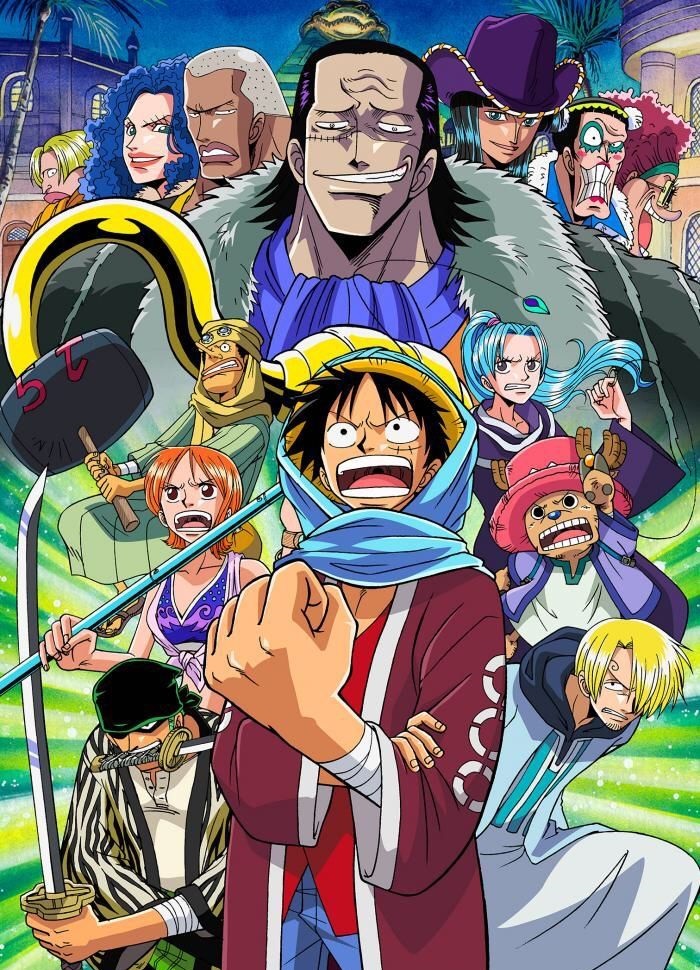
Baroque Works is all over the fucking place.
The thing is, it’s about as long as East Blue, but is way more inconsistent in terms of pace and quality. This is probably where One Piece’s consistency issues really becomes apparent, in fact, it is perhaps the example of this issue.
I talked about before how Loguetown did a great job of establishing a lot of forward momentum for the series, but Baroque Works just takes all of that momentum and throws in into the fucking garbage.
The thing is, Eiichiro Oda is certainly capable of pacing his series well and the reason I know that is because there have been plenty of times he’s been able to pull it off. I also think, that is, when he wants to, he’s really good at establishing a forward sense of momentum and convincing me the series is really going somewhere...
However, for whatever reason, he’ll just decide to throw it all off a fucking cliff and bring everything to a screeching halt. That’s how I felt here, in part because Baroque Works was ultimately just like a secondary prologue, like we were put in basically the same place as where the series began.
I don’t know, I just think he could stand to be a more efficient writer, I guess. It’s particularly bad here because it establishes fairly early on that it’s building towards an ultimate conclusion, but it just felt like it takes forever to get there.
I think it says something that my favourite arc of the four was essentially just like a side quest that doesn’t really have anything to do with the overarching narrative. Interesting stuff happens all throughout this portion of the story, yes, but there is pretty much always dead time between those highlights.
Little Garden is an obvious example of this. There are these two giants who live there and I thought they were awesome, it made me feel like a kid again, and I was really interested in anything that had to do with them...
However, right after they get introduced, there is just this... boring, really, really needlessly long fight that happens that I was just suffering trying to get through.
To speak of the Baroque Works themselves, while they were a good idea, fair enough, I’m not a huge fan of most of the villains that show up throughout this point in time, to be completely honest. I don’t really care about anybody in the Baroque Works outside of “Miss All Sunday” and “Mister Zero”.
Mister Two was really good, he was absolutely my favourite, and Mister Three eventually grew on me after he was reintroduced way down the line, but everyone else in the Baroque Works, I can’t say that I remember that much about them.
Once the crew actually makes it to Alabasta, I think things actually start to get a lot more interesting...
...expect when they’re not? Okay, I think Alabasta for sure has some really high points, it’s for sure grown on me a lot more over time, but when it’s boring, it is boring.
This is gonna sound like small potatoes the further we get into the series, but as my first impression, I felt that it was jumping back and fourth between perspectives in a way that I didn’t find particularly intuitive to read, and I also felt that this arc placed way too much focus on side and background characters whom I didn’t end up caring about at all.
Alabasta could get pretty messy, but on the flip side, when it’s good, it is really fucking good. Alabasta has some interesting world-building, incredible fights, and plenty of compelling character moments. So, overall, I think Alabasta was able to survive any criticisms that I was able to throw at it by the end.
This whole saga, as a full package, it’s not horrible or anything, but it carries with it a lot of the same problem as East Blue, but without the same number of indicators that we as readers were making progress.
As the series was first starting out, we were constantly getting introduced to new main characters and concepts, but that doesn’t happen nearly as often in this instance. This isn’t gonna go down as the worst section of One Piece or anything, but it was one of the more difficult for me to finish.
Skypeia
Chapters: 218-302 (85)
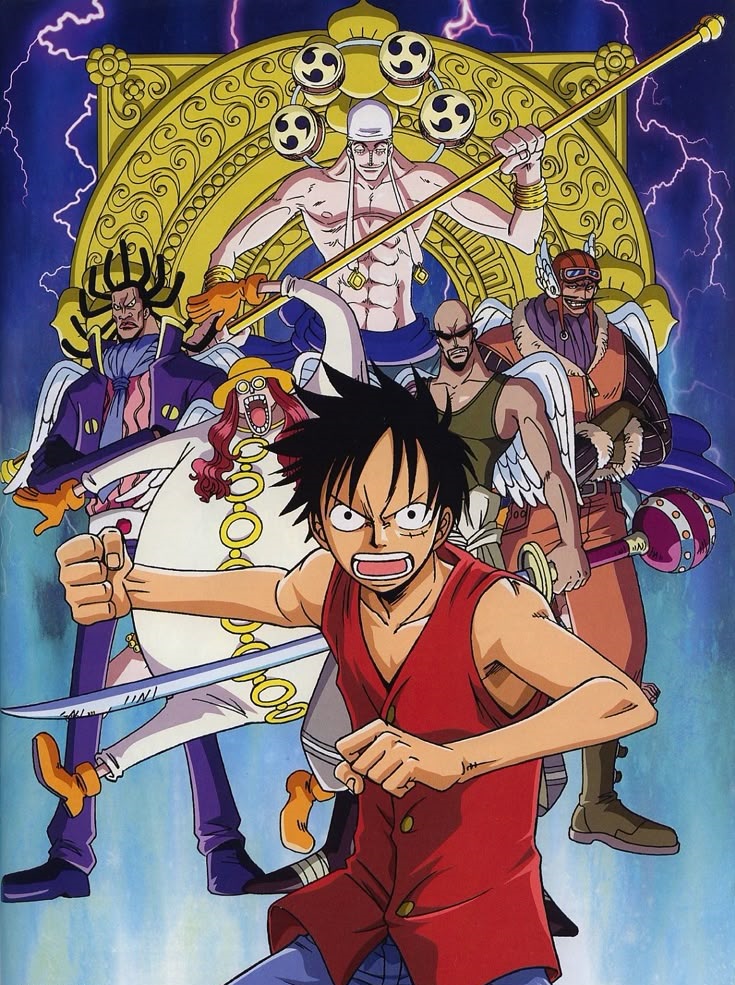
It’s difficult to say what I think about Jaya because I don’t know if it means too much to me in hindsight. It tricks you by making it very clear how far Luffy’s come since the start of the series and it’s disappointing because I personally consider that sense of growth really valuable. It’s one of my favourite parts about engaging with any long-form story, so the fact that we don’t get to see it in One Piece, it’s very disappointing.
When it came time to rank all of the Straw Hats before the time skip, Luffy ended up in my bottom three and that’s largely just due to the fact that while he’s a lot of fun to watch, he also has no substance. I find that a lot of Japanese characters tend to fall into this pattern where, if you don’t know what to do with a character, then just make it so the joke is that they eat.
A good example of this was during Whisky Peak. There’s a pretty serious fight that happens between Luffy and Zoro, and while that could have been used as an interesting character moment, signalling to the viewer that Luffy still has a lot to learn before becoming the King of the Pirates, it simply just gets laughed off, haha, never mind, please don’t take it seriously!
Alright, so, similar to Loguetown, this is where a lot of new characters and new concepts make their first appearance and where some characters get reintroduced, or formally introduced concepts get expanded upon. I couldn’t help but get a little too excited about people just showing up and basically just standing there.
A better place to talk about this would probably be Fishman Island, but since we won’t be going over it, let’s talk about how One Piece handles it’s themes. We’ll use one of the first villains we see, Captain Morgan, as an obvious example.
Captain Morgan was used to show us that it’s wrong to misuse a position of power and having a position of power isn’t necessarily the same as deserving it. While this isn’t a bad lesson to teach kids or anything, none of it was explored in a thoughtful way. Morgan says constantly, many, many times, that his rank entitles him to say and do whatever he wants, and by the end I couldn’t help but find it a little annoying.
Jaya probably wasn’t the worst example of this, but it is annoying regardless. The themes are just repeated verbatim through dialogue without any subtlety, analogy, or metaphor, over and over again.
Early on, One Piece was thematically malnourished and the way it’s themes were tackled is typically extremely straightforward, but past this point, things do get significantly more complex. Even though One Piece doesn’t often implement it’s themes in the way that I would personally prefer, there are plenty of times, at least, that I could appreciate what it was trying to say.
One Piece from this point on has things to say about some serious real world issues, like bigotry and how the oppressed interact with their oppressors, or the power and prevalence of weaponized information and disinformation, particularly how these things can be used by and how powerful they are in the hands of political institutions, like in One Piece’s case, the world government.
One of the core themes in Skypeia, therefore, is the long-term effects of colonialism...
Whew, did you survive all that?
Skypeia was a portion of One Piece that I was really excited to get to because for whatever reason, opinion starts to vary wildly, at least for those original fans who were able to stay caught up ‘till this point, but it definitely has more of a fandom these days... and... I think I’m one of them?
I will say that it deviates fairly significantly from the typical One Piece formula that Eiichiro Oda used for a lot of the arcs before it, the only real exceptions being Loguetown and Jaya, but besides that, Skypeia was really the first one that pretty much just completely breaks off and tries to do something else.
Particularly by the climax, Skypeia does start to feel reminiscent of all the other arcs in One Piece again, particularly because the threat posed seems to be very similar to the one in Alabasta, although, to be fair, it’s quite a bit cooler when it happens in this instance. There’s just way more of a spectacle to it.
To speak of Enel, he’s great. One Piece doesn’t have too many great villains, but I would add him to the small pile that actually are pretty good, alongside Buggy, Arlong, and Sir Crocodile thus far.
His henchmen are like... I don’t know, they exist, I can’t even be bothered to remember their names, if we’re being totally honest, but Enel himself, oh, he’s fucking awesome.
I was honestly kind of surprised that so many people hated it. While you could argue that Skypeia didn’t reach the same heights that Alabasta did, I still felt that it was much more consistently written than everything that came before it. This was as consistent as One Piece had been up until this point.
Water 7
Chapters: 303-441 (139)
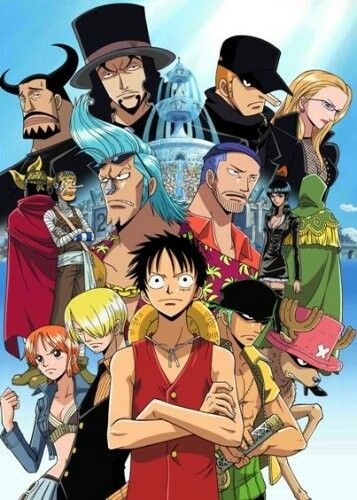
When it comes to Long Ring Long Land, I must have been in a really good mood or something when I first read it because... I kind of lived for it? The thing is, if it lasted any longer than it had, that probably would not be the case, but... you know, it’s not that long.
To be objective though, it really is just the most filler, but it’s actually in the manga types of arcs that I have ever read in my entire fucking life.
But Water 7 is where One Piece grows it’s beard for all intensive purposes. Water 7 is just really good. It’s better than Alabasta and it’s better than Skypeia. It has a really strong start, a phenomenal atmosphere, and once again, has a real unique narrative structure compared to what we’ve come to expect.
You could make the argument that it gets pretty cluttered and awkward towards the end, but in hindsight, pretty much every single arc in One Piece has a section that’s cluttered and awkward, so it’s small potatoes.
This is gonna sound strange, but Enies Lobby changed my brain chemistry a little bit, possibly in part because Nico Robin is at around the same age I am, so I was able to get my skull fully bashed in as a result. I don’t know, I think I just got to this point in the story at a very confused time of my life.
Enies Lobby has the best pacing in One Piece, some of the best fights in One Piece, some of the best character moments and character development in One Piece, some of the best world-building, pretty much everything that you’d be looking to get out of the series, is practically here in Enies Lobby.
I think this is the arc that convinced me that I needed to stick with One Piece until the very end. I had already tried to do it just to see what all the hubbub was about, but it’s here where I really wanted to complete One Piece for it’s own sake.
Thriller Bark
Chapters: 442-489 (48)
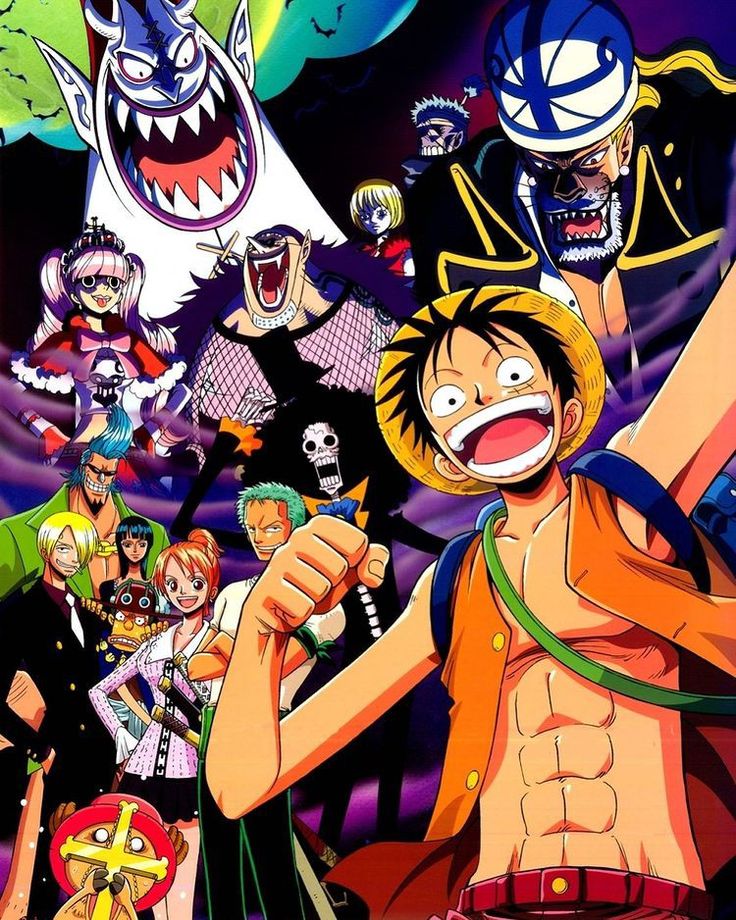
It’s here in Thriller Bark where I think One Piece’s tendency to throw it’s momentum off a fucking cliff really shoots itself in the foot. It’s a crying shame because Thriller Bark actually starts off on a similar level of writing consistency like how we’ve come to expect since Skypeia, so the issue isn’t necessarily that it’s boring, but it is long.
It’s consistently funny at the beginning, has plenty of great character moments, including one new member of the main cast, and gives a lot of the existing members of the main cast some of their best character moments. It also follows up on some fairly important plot points from earlier in the series, so it does do a lot of things amazingly well...
...but so much of it feels like fluff.
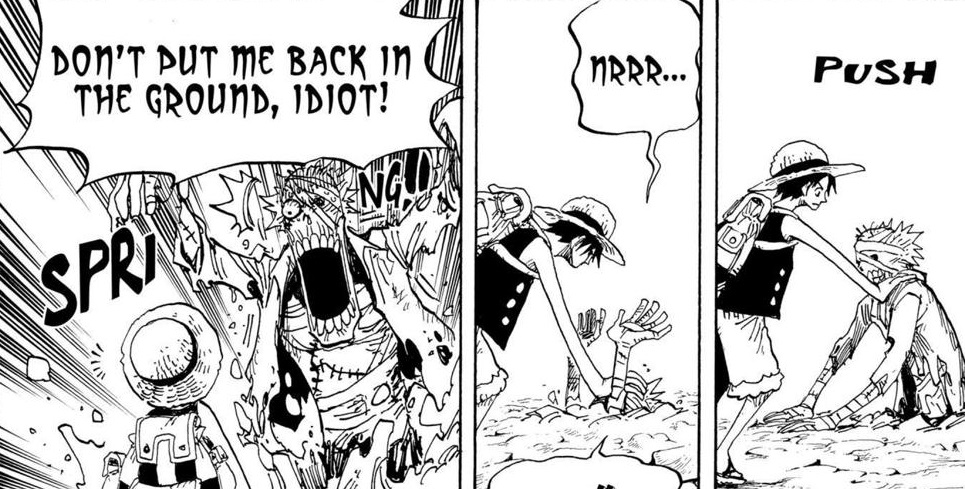
I think the major problem was that while it’s able to juggle all of the members of the main cast extremely well, the same can’t be said for Brook, who doesn’t get to be too involved until the very end.
He also doesn’t get involved with the main villain of Thriller Bark, Gecko Moria, so it’s leaving out any sort of main emotional through-line that this arc was otherwise missing. Thriller Bark is almost like a doughnut in that way, it does a lot of things right, but there is just a giant gaping hole in the middle.
Paramount War
Chapters: 490-597 (108)
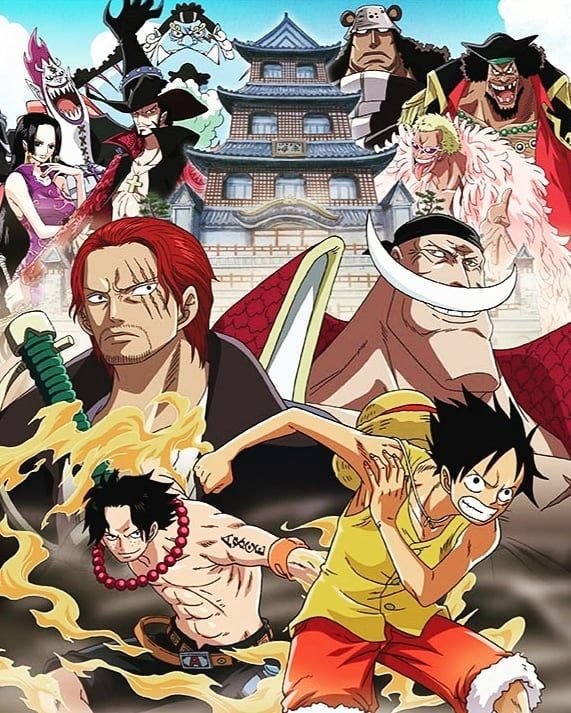
One Piece really picks right back up with Sabaody Archipelago, thankfully. It’s super fast paced, open ended, intense, and unpredictable in ways that few other One Piece arcs are capable of. It introduced a ton of key story elements and typically in a very exciting way. I also felt like something important was always happening, and the end is one of my favourites.
Amazon Lily, on the other hand, was fucking garbage. In all fairness, it manages to maintain the momentum established by Sabaody Archipelago, and Boa Hancock was a fun and memorable character... if you’re able to look past her basic and uninspired character design.
I just don’t think “the island of beautiful women” really suits a young, empty-headed, effectively asexual character like Luffy. I’ve seen it done funnier and way more interestingly in shows like Johnny Bravo and Futurama. I’m also not an age-gap type of person, not usually, but even I felt a little uneasy seeing this 30 year old woman fall in love with a 17 year old boy. It’s just not for me, sorry.
Impel Down, meanwhile, is a work of fucking genius. I felt that this was one of the most rewarding parts of reading One Piece. It’s also one of the few arcs where I can confidently state that it doesn’t bother me how it’s maybe just a little longer than it needed to be because I just had so much fun.
So... a thing that’s really started to occur to me by this point is that One Piece’s adventure stories are consistency, wholly inferior to it’s thriller and espionage ones. One Piece tends to be at it’s best when it wholly breaks off from trying to be a pirate manga, and... that’s kind of a problem! A really big one!
Anyways, Impel Down reintroduced a lot of my favourite characters and characters I didn’t even like previously, but this arc helped me to reappraise them. Oh, you didn’t like this character? Bam. Now you do.
Marineford is just fucking insane. It sits alongside Arlong Park and Enies Lobby as my absolute favourite arcs in One Piece, and by a fairly wide margin too. And if you don’t count Thriller Bark and Amazon Lily, starting from Water 7, what you would probably have is the best stretch in all of One Piece.
Marineford is in contention for the absolute most world-building in all of One Piece. It’s constantly hitting you with new characters and concepts, all in the middle of some of the coolest set-pieces I have ever seen in shonen. There are like a billion insane things that are happening back to back to back to back.
The pacing here is perfect, pretty much every single character that makes an appearance is at their best, or at least close to their best, and it just really opens up the world of One Piece for good measure.
Characters
Okay, rather than talk about the New World, I wanted to take the time to speak on One Piece as a whole, things that more or less apply to the entire series.
I almost felt that One Piece gets to the point where it has way too many fucking characters, but... I also think it scores a home-run where it counts. Many of it’s side characters are pretty boring and forgettable, I’m sorry to say, but everyone important is at the very least pretty well characterized and likeable.
The reason why it’s frustrating is because One Piece tends to focus on these side characters a little more than I think it should, sometimes a lot more than I think it should. I don’t really hate the fact that these characters exist or anything, don’t get me wrong, just the fact that they stick around for too long and have way more of an active role than I think they should.
But when One Piece nails it though, it absolutely nails it. Creating and realizing the "essence" and "soul" of these characters is something that I think Eiichiro Oda can be very good at. Even if he doesn’t always use or implement these characters perfectly, he knows exactly how to make a likeable one.
A great example of this would be the Straw Hats themselves. There’s 10 Straw Hats by the time we reach the final saga and no one really feels superfluous, at least not on the surface. They’re all pretty varied and diverse, and all fill their slots in the cast perfectly, they're all able to sync together like a family unit, and there’s not like this sense where you feel like there’s something missing.
My favourites, at least before the time skip, were Zoro, Usopp, and Robin. Not only do these characters all get introduced fairly early, but it also felt like they were always doing something. Having characters that are this likeable, present for so much of the series, is extremely important, and it does a lot to help make getting through such a long series less painful.
Now, even having said all that, even some of the main cast... isn’t handled perfectly...
The prime example of this would probably be Sanji, whom by the time before the time skip, ended up in my bottom three as my second least favourite, only to have eventually been beaten out by Brook.
I think a part of the problem is that he doesn’t get too much to do because his character is being put on the bench for Whole Cake Island, which is after the time skip, so before then, he was just a walking joke. There is also just a running gag with Sanji that gets extremely annoying, extremely quickly.
Sanji certainly had the potential to be really great, if not for this he’d probably be one of my favourite characters, easily. In fact, during Whole Cake Island, it’s toned down significantly and it works out great! But at the same time, as soon as the arc is over, the gag comes back... and I hated it.
So, not only does the character remain stagnant for such a long period of time, it also just gets really repetitive, being used to tell the exact same joke a billion times... and it’s just not that funny.
Fan-service

Now is as good of a time as any to talk about the fan-service. To be clear, this is a pro-horny space, it shouldn’t be a problem to fill your comic with hot men or hot women, whichever you prefer. It’s difficult to explain, but the way I would describe it would be “homo social”.
Which is just a smart sounding way to say you don't have any female friends.
There’s the movie “Goat” that just came out that’s incited by the main character, whom aspires to be like his idol, that idol being a female basketball player. The reason I point this out is because that sort of thing is extremely rare in media, where men can look up to and admire women in a platonic way.
I feel this lack of “hetero sociality” is the reason why Eiichiro Oda is so repetitive and incapable of drawing sexy women. In fact, he’s so much better at drawing attractive men, be that Zoro as this big, dumb, himbo jock, or Sanji as this cringe little baby-girl twink. In fact, it’s crazy how hot Jinbe is, somehow this straight-ass man was able to understand the beauty of fat old dudes.
The point where this sort of thing really ramps up would probably be starting with the Paramount War saga, where now there is just naked ladies all over the goddamn place, and most of them all look extremely similar to Nami or Robin. This is why it all comes across as boring and a little obnoxious.
Pacing
I need to talk about the pacing next because I think this is the area One Piece is the absolute weakest in. The sense of progress is definitely toned down compared to the likes of Dragonball Z or Naruto. In those series it felt like something was constantly happening, but in One Piece, you definitely have to be patient for the high points.
It was often the case where it’s chapters felt way longer to me than they actually were. One of Eiichiro Oda’s main weaknesses is that he just spends way longer than he needs to on most of the fucking things in One Piece. This is a lot worse in the Toei adaptation, but even in the manga, you could for certain condense plenty of scenes, plot threads, and even entire arcs, into less chapters, just overall time than they tend to take up.
As a result, One Piece can turn into a real slog.
I don’t think you can chalk this up to incompetence, Eiichiro Oda is for sure capable of being a more efficient storyteller, but he just chooses not to be for whatever reason.
Panelling
Okay, we need to talk about One Piece’s panelling next because at no point was it ever very good, and you would think this wouldn’t be a problem eventually, but it actually tends to get worse the further you get into the series, not better like you would expect.
Starting with the New World in particular, there’s just not a good sense of flow between each panel, even between each fucking page sometimes, which can make One Piece hard to read, with Punk Hazard being a notable example. I sometimes had to reread certain pages, even several groups of pages, many times throughout the course of reading One Piece.
This is kind of at odds with what I just said earlier where I complained that One Piece’s pacing is inefficient, but at the same time, the panelling itself creates this sense where it’s pacing is extremely quick. It’s weird how both of these complaints can co-exist at the same time.

It’s difficult to explain because I’m not an expert, but One Piece uses panels for narrative beats, allowing the time between to merely be implied, whereas something like JoJo’s Bizarre Adventure hones in on those emotional moments to really immerse you in the scene.
We can use Nami’s “Help Me” scene from Arlong Park as an example of this, where it’s actually better in the Toei adaptation because it was able to take it’s time and hone in on those emotional moments, whereas in the manga, it feels like it just speed-runs through it.
You can directly compare this to something like JoJo’s Bizarre Adventure, which has a lot of suspense, big detailed panels, and there was even that one time Giorno punched a guy for seven pages in a row.
This isn’t to say one style of panelling is better than the other, even if they’re the complete opposites of one another. My issue is just that One Piece can often condense too much information into one panel. A lot of the text in particular doesn’t really need to be there, a lot of these speech bubbles you could just cut completely without it affecting the story.
You’ll sometimes end up with a page, or series of pages, that’s full of fucking text. This isn’t a problem with just One Piece though, a lot of shonen is overwritten, overspoken, and is filled to the fucking brim with flashback after flashback after flashback. It’s not quite as bad as Hunter x Hunter could be, for comparison, but there’s still at least a few chapters that will make you feel like you’re reading a goddamn novel rather than a comic book.
World-building
The thing is, a lot of One Piece’s arcs have low points. Typically those low points come from Eiichiro Oda introducing way too many characters, and too many plot threads, and insisting on following all of them. Dressrosa being a notable example of this, where there are just way too many scenes dedicated to following brand new characters, that I just didn’t care about at all.
A lot of these characters weren’t major or anything fucking close to that, they were very, very minor and I don’t even remember a lot of their names. It just seems like he has to explore and implement any random idea that pops up into his head, he just refuses to cut them no matter what, and a lot of the time what this leads to is just a lot of boring and/or pointless fluff. I’d rather be spending that time focusing on the actual main characters of One Piece.
With that being said, One Piece tends to be very, and I do mean very good at following up on loose plot threads. If a character shows up and doesn’t initially have a very active role, or doesn’t seem to go anywhere initially, chances are they're at least thinking about trying and circling back to them.
There were many, many, many times where I was frustrated because I didn’t understand why we just spent time with this, or why we just wasted our time with that. And then, later on in the story, that thing or that person ended up doing something really cool or interesting. It happens all the fucking time and it’s typically done very well.
If you’re one of those boomers who were looking for that kind of thing from Star Wars, a story’s world-building rewarding you by sticking with it for so long, then I think there’s a pretty good chance you’ll end up a pretty big fan of One Piece.
The world-building comes at a cost though, pretty much every single character gets a multi-chapter fuck-huge flashback explaining their backstory, and you’ll also have to spend extended periods of time with characters that, chances are, are very minor and you don’t give a fuck about at all.
I don’t know if it’s typically worth it or not, even through One Piece usually takes these things someplace interesting, albeit eventually, often I just found that I would’ve rather that time being given to spending more time with the actual main characters, that’s whom I care about the most.
Combat
Let’s briefly talk about the quality of One Piece’s fights. They’re... good? One Piece has some fights here and there that are superb, but I don’t think One Piece’s action and choreography is on the same level as it’s contemporaries, be that Dragonball Z or even newer examples like Jujutsu Kaisen.
You know those guys who say that action scenes are supposed to be all about the emotion, man? Well, we’ll be using Nami as an example of this as her methods of combat were one of my favourites.

Starting with Alabasta she acquired the clima-tact and I thought this thing was a work of genius. In the beginning it was split up into three sections, the first can produce heat, the second can produce cold air, and the third can electrify the area around it.
By using these three sections, she gained access to a huge variety of attacks that all make sense when you really think about how the clima-tact works. It’s actually a surprisingly intricate system that I just found fascinating.
The problem is that each character’s abilities actually become less interesting the stronger they get, not better or more varied like you think they would. After the time-skip she just... shoots lightning... in a really straightforward manner.
Nami is able to acquire Zeus and that does make things a little more interesting again, but given the varied climates and weather patterns on each new island, her abilities should just be as unpredictable.
In conclusion...
Yes, I felt that One Piece was worth the time I put into it, but I also can’t help but find myself a little disappointed at the same time. One Piece was just a huge mixed bag, with a lot of floundered potential, and a far cry from the “modern odyssey” that it gets touted as online.
One Piece really exemplifies that bigger doesn’t mean better, that a focus on extensive world-building should not take precedent over extensive main characters. And in the end, if things don’t slow down, it’ll most likely end the same way as Game of Thrones and Stranger Things... disappointing.
Oh, and if you’re curious about One Piece after the time skip, the 200+ chapter stretch from Fishman Island to Dressrosa is excruciating. I don’t think it’s very good, and while it never really returns to it’s previous heights, it at least becomes fun to start reading again, starting with Zou and Whole Cake Island.
That’s my take.